Price of Laser Treatment for Secondary Cataract
Prof. Michael Mimouni is an ophthalmic surgeon specializing in secondary cataract and YAG laser capsulotomy. An appointment can be booked with Prof. Mimouni for private laser treatment at a price of ₪2,800 — YAG laser capsulotomy is an extremely simple laser procedure. The procedure itself takes less than 5 minutes, and no fasting or advance preparation is required. Please remember to bring identification with you. It is often possible to perform the procedure on the day of the consultation itself. Laser treatment for secondary cataract is performed privately only (arrangements also exist with the insurance companies Direct Insurance, Ayalon and Clal Insurance). Appointments can be booked by phone at 058-644-5151 or by leaving your details through the contact form on the website.
Secondary Cataract — Definition, Causes, and Advanced Treatments
Introduction to Secondary Cataract (Posterior Capsular Opacification)
In order to understand what a secondary cataract is and how it is treated, one must first understand what a cataract is. A cataract, known for the clouding effect it has on the eye’s lens, is a common problem affecting millions around the world. While most people are familiar with the primary cataract that develops with age or from other causes, there is another ocular diagnosis known as “secondary cataract.” Despite its name, a secondary cataract is not a return of the original cataract; rather, it refers to clouding of the posterior lens capsule that holds the artificial lens in place after cataract surgery. This condition is known in medical terminology as posterior capsular opacification.
The lens of our eye is similar to a camera lens, focusing light onto the retina so that images are clear and sharp. Any obstruction or clouding, such as that caused by a cataract, disrupts this process, leading to blurred or impaired vision. While a primary cataract develops directly within the lens, a secondary cataract develops behind the artificial lens that is placed during cataract surgery.
In the following sections, we will delve deeper into what exactly a secondary cataract is and distinguish it from its primary counterpart. Understanding its causes, risk factors, and potential symptoms can aid early detection and treatment. As we navigate the complexities of secondary cataract, we will also examine current diagnostic tools and treatment options, along with preventive measures to minimize the risk of its occurrence.
Posterior Capsular Opacification (Secondary Cataract) — Definition
The human eye is a marvel of intricate design and function. To understand secondary cataract, it is essential to first grasp the anatomy of the eye, particularly the lens and its envelope — the lens capsule. The lens, transparent and flexible, is located behind the iris and the pupil. Its primary role is to focus light rays onto the retina, the light-sensitive tissue lining the back of the eye. Surrounding the lens is a transparent, elastic-like sac known as the lens capsule.
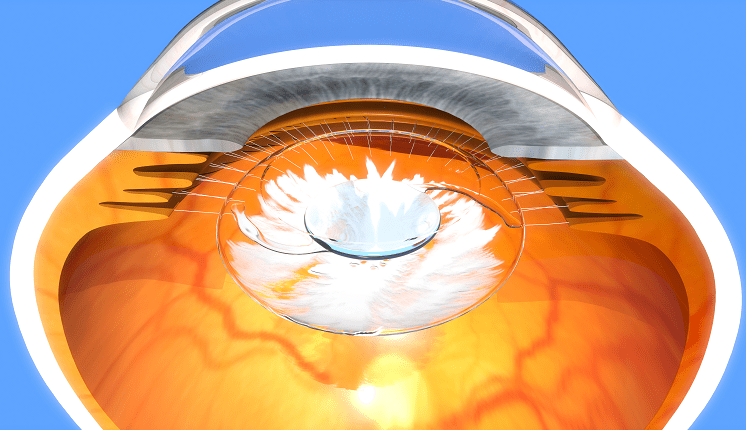
During cataract surgery, the cloudy natural lens is removed, but the back portion of the lens capsule is left intact to hold the artificial intraocular lens (IOL) in place. It is this remaining posterior lens capsule that can, over time, become cloudy or thickened, leading to a secondary cataract.
While a primary cataract forms within the lens itself, resulting from changes in the lens proteins and fibers due to aging, genetic disorders, or other factors, a secondary cataract is different. The opacification of the posterior capsule results from the proliferation of lens epithelial cells (LECs) left behind after cataract surgery. These cells can migrate, grow, and multiply on the back surface of the lens capsule, forming a layer that interferes with the passage of light. The result? A clouding effect resembling the visual symptoms of the primary cataract, hence the term “secondary cataract.”
However, it is essential to clarify that a secondary cataract is not a newly formed cataract or a recurrence of the original one. It is a condition exclusive to those who have undergone cataract surgery and is related to the body’s healing response and cellular activity after the operation.
Causes of Secondary Cataract
Understanding the underlying causes of posterior capsular opacification (secondary cataract) is essential both for medical professionals and for patients who have undergone cataract surgery. While modern surgical techniques and advanced intraocular lenses have significantly reduced the incidence of secondary cataract, it still remains a post-operative concern for many. Below are the main factors contributing to the development of secondary cataract.
The Role of Lens Epithelial Cells (LECs)
The eye’s lens is wrapped in a capsule, a transparent envelope that holds the lens in place. The outermost layer of this capsule contains lens epithelial cells (LECs). During cataract surgery, while the cloudy lens is being removed, some of these LECs remain. Over time, these residual LECs can multiply and migrate to the posterior capsule, where they undergo a process known as “epithelial-mesenchymal transition.” This process causes the cells to become fibrous. These fibrotic changes lead to thickening and clouding of the capsule, resulting in secondary cataract.
Surgical Considerations
The surgical technique and the surgeon’s skill play a significant role in determining the likelihood of developing a secondary cataract. Precise removal of the central portion of the anterior lens capsule, known as anterior capsulotomy, ensures that the intraocular lens is correctly positioned and reduces the chance of LECs migrating to the posterior capsule. Incomplete removal or an irregular capsulotomy can lead to higher rates of secondary cataract.
Factors Contributing to the Development of Secondary Cataract After Surgery
Intraocular lens (IOL) material and design: The type of IOL implanted can influence the risk of secondary cataract. Some studies suggest that hydrophobic acrylic IOLs carry a lower risk of secondary cataract compared with other materials.
Post-operative inflammation: Excessive inflammation after cataract surgery can stimulate LECs and accelerate their migration, leading to faster development of secondary cataract.
Post-operative complications: If complications arise during or after cataract surgery, such as lens subluxation or a partial tear of the posterior capsule, the likelihood of secondary cataract can increase.
The many causes of secondary cataract stem from the eye’s natural cellular responses after surgery, from surgical techniques, and from choices made during the operation. Awareness of these factors ensures that physicians are better equipped to prevent this condition.
Symptoms of Secondary Cataract
Posterior capsular opacification is often called a “secondary cataract” not because it is a return of the original cataract, but because its symptoms closely mirror those of a primary cataract. Recognizing these symptoms is essential for timely diagnosis and treatment. Below are the main symptoms associated with secondary cataract.
Blurred or Cloudy Vision
One of the most prominent symptoms of secondary cataract is a gradual decline in visual clarity. Just like a fogged-up window, the thickening of the posterior capsule blocks the passage of light, leading to blurred or cloudy vision. This effect can be especially noticeable when reading or focusing on fine details.
Glare or Light Sensitivity
People with secondary cataract often report increased sensitivity to bright lights. This can manifest as glare or halos around lights, especially at night. Night driving can become particularly challenging because of the glare from car headlights.
Reduced Visual Acuity at Night
Beyond glare, overall night vision may diminish. This reduced visual acuity in low-light conditions can make activities such as driving or walking in dimly lit areas more challenging.
The Sensation of a Thin Film Over the Eye
Some patients describe their vision as though they are looking through a dull film or a piece of cloudy paper. This sensation can be frustrating, especially when constantly cleaning glasses or contact lenses does not solve the problem.
Frequent Prescription Changes
A rapid or frequent change in a glasses or contact lens prescription may be a sign of secondary cataract. As the opacification progresses, the required vision correction may shift, prompting changes in the prescription.
It is important to note that the severity and range of symptoms can vary between individuals. While some may experience a marked decline in vision, others may notice only subtle changes. Regardless of intensity, any sudden or gradual change in vision after cataract surgery warrants an immediate consultation with an ophthalmologist. Early detection and intervention can effectively treat secondary cataract, restore clear vision, and improve overall quality of life.
Risk Factors for Secondary Cataract
Understanding the risk factors associated with posterior capsular opacification can help both with prevention and with early diagnosis. While anyone who has undergone cataract surgery is potentially at risk of secondary cataract, certain factors may increase its likelihood.
Age Considerations
Younger patients have a higher risk of developing secondary cataract. This is because younger individuals tend to have more active lens epithelial cells (LECs) that can migrate and proliferate on the posterior capsule.
Previous Eye Surgeries or Injuries
A history of eye surgeries, especially if they involved complications, or traumatic eye injuries can raise the risk of secondary cataract.
Underlying Medical Conditions
Certain medical conditions, such as diabetes or uveitis (an inflammatory condition of the eye), can place a person at higher risk of secondary cataract. This often results from increased inflammation or other related cellular activity.
Medications
Certain medications, especially corticosteroids used in the eye for prolonged periods, may contribute to an increased risk of secondary cataract.
Surgical Techniques and Intraocular Lens (IOL) Choice
As mentioned earlier, the type of IOL implanted and the surgical techniques employed during cataract surgery can influence the development of secondary cataract.
By identifying and understanding these risk factors, patients and physicians can take proactive measures, from surgical decisions to post-operative care, to minimize the chances of secondary cataract occurring.
Diagnostic Methods
Timely diagnosis of posterior capsular opacification is essential for effective treatment. When patients report symptoms consistent with secondary cataract, ophthalmologists use a series of diagnostic methods to confirm its presence.
Comprehensive Eye Examination
A complete eye examination by the ophthalmologist will help rule out other eye disease. This typically includes a visual acuity test to measure the sharpness of vision.
Slit-Lamp Examination
A slit lamp is a device that combines a microscope with a high-intensity light source. Using it, the doctor can closely examine the structures at the front of the eye, including the lens capsule. This examination can clearly reveal opacification or changes in the posterior capsule.
Retinal Examination
To obtain a detailed view of the back of the eye, including the retina, an ophthalmologist may dilate the pupil using special eye drops. This helps determine whether the decline in vision is due solely to secondary cataract or whether other retinal problems are present.
Additional Ancillary Tests
Based on initial findings, other tests such as optical coherence tomography (OCT) or visual field testing may be performed to gather further information about the health of the eye and rule out other potential causes of vision loss. The diagnostic process for secondary cataract is usually straightforward and non-invasive. If a secondary cataract is identified, treatment can begin immediately, and the result is often a rapid restoration of clear vision.
Treatment Options for Secondary Cataract
Posterior capsular opacification can be a source of concern for many patients after cataract surgery, but it is treatable. Once diagnosed, the primary goal is to restore clear vision and relieve the associated symptoms. The main treatment options available for secondary cataract are outlined below.
YAG Laser Capsulotomy
YAG (Yttrium-Aluminum-Garnet) laser capsulotomy stands out as the primary treatment for secondary cataract. It is a non-invasive, outpatient procedure characterized by several features:
Procedure dynamics: During this treatment, a laser is used to create a small opening in the cloudy posterior capsule without making any incision in the eye. This opening allows light to pass through unobstructed and restores clear vision.
Duration: The procedure usually takes just a few minutes and is generally painless.
Recovery: Most patients experience a significant improvement in vision within hours, although it is recommended that someone be available to drive after the procedure. Mild side effects such as dark floaters or a slight increase in intraocular pressure may occur, but they are usually temporary and resolve within a few days to weeks.
While YAG laser capsulotomy is highly effective, it is worth noting that once performed, it is permanent, and the procedure cannot be reversed. That said, the vast majority of patients experience long-lasting relief and a marked improvement in vision after treatment.
Preventing Posterior Capsular Opacification
The saying “prevention is better than cure” carries weight when it comes to secondary cataract. While not all cases can be prevented, certain measures can minimize its likelihood:
-
Advanced surgical techniques: Using modern cataract surgery techniques and ensuring complete and precise removal of the anterior lens capsule can reduce the risk of secondary cataract.
-
Intraocular lens (IOL) choice: As mentioned earlier, the material and design of the IOL can influence the development of secondary cataract. Choosing newer IOL designs and materials, such as hydrophobic acrylic, which have been shown to be associated with lower rates of secondary cataract, can be beneficial.
-
Post-operative medications: Using anti-inflammatory medications and corticosteroids after cataract surgery can reduce inflammation, a factor that can trigger the migration and proliferation of lens epithelial cells.
-
Regular follow-ups: Maintaining a schedule of regular eye examinations after cataract surgery allows early identification of secondary cataract or any other complication, leading to timely interventions.
-
Patient education: Ensuring that patients are well informed about the potential signs and symptoms of secondary cataract can lead to early detection and treatment. Awareness also encourages adherence to post-operative care instructions.
It is worth emphasizing that while preventive measures can reduce the risk, they do not guarantee that a secondary cataract will not develop. Nevertheless, with effective treatments available and an informed approach, secondary cataract remains a manageable condition with a high success rate of vision restoration.
Living with Secondary Cataract
Navigating daily life with posterior capsular opacification can be challenging, given its impact on vision. However, understanding the condition, proactively managing its symptoms, and seeking early treatment can greatly improve quality of life.
-
Awareness is key: Recognizing the early signs of secondary cataract, such as blurred vision or increased light sensitivity, is the first step toward effective treatment. Noticing these changes calls for a timely consultation with an ophthalmologist.
-
Adjusting daily activities: People with secondary cataract may find it necessary to adapt their routines to reduced vision, especially during the onset of symptoms. This may include limiting night driving, increasing indoor lighting, or using magnifying aids for reading.
-
Emotional impact: Living with reduced visual acuity can be frustrating and at times lead to feelings of anxiety or sadness. Seeking support, whether by talking with loved ones or through professional counseling, can provide emotional relief.
-
Regular eye examinations: Even if the symptoms seem manageable, regular eye examinations are essential. These examinations ensure early identification of any progressing secondary cataract or other eye-related complications.
-
Stay informed: Advances in ophthalmology mean that treatment techniques are constantly evolving. Keeping up to date on new developments can open the door to more effective treatment options or preventive measures.
Summary
Posterior capsular opacification, often called “secondary cataract,” remains a noteworthy concern for people after cataract surgery. Although its onset can be worrying, the combination of modern diagnostic methods and effective treatments such as YAG laser capsulotomy ensures that secondary cataract is a treatable condition. Preventive measures, together with patient awareness, can reduce its impact and ensure that the gift of clear vision, once restored through cataract surgery, remains uncompromised. As with many medical conditions, proactive care, regular examinations, and open communication with a specialist ophthalmologist are the cornerstones of navigating secondary cataract and maintaining optimal eye health.