An eye injury from a road accident and the very same injury from a work accident can look identical on the examination table — the same cornea, the same retina, the same percentage. But the way each becomes compensation differs at the root: who is sued, who sets the percentage, and how the percentage turns into money. This page is about the road-accident track. The picture of the parallel track is on eye injury in a work accident, and the framework for the civil expert opinion is on eye expert opinion for civil damages.
Absolute liability: no need to prove fault
The Road Accident Victims Compensation Law is built on one principle that governs all the rest — absolute liability. A road-accident bodily-injury victim is entitled to compensation without proving that anyone was negligent, and even if the accident was his own fault. There are exceptions — someone who caused the accident deliberately, who drove without a licence or without insurance, who drove a stolen vehicle — but the rule is that the question “who is at fault” is barely asked.
The claim is brought against the compulsory insurer of the vehicle involved. Where there is no valid insurance, or in a hit-and-run in which the driver was not identified, the Karnit fund — the Fund for Compensation of Road Accident Victims — steps in and pays in his place.
A further principle worth knowing is exclusivity of cause: the road-accident law is the sole track for bodily injury from a road accident. One cannot bring a parallel ordinary tort claim for the same accident, and one cannot recover twice. What is decided in this track is decided in it.
Who sets the eye disability percentage
Here lies the sharpest difference from an ordinary tort proceeding. In a road-accident claim, the medical evidence comes from a single expert appointed by the court — not from the plaintiff, not from the defendant. The parties do not submit private opinions of their own; Regulation 9(b) of the Experts Regulations even bars that expert from requesting or receiving medical opinions from the litigants.
The ophthalmology expert examines the injured person and sets the medical disability percentage — by the same National Insurance disability tests used across every other track. In ophthalmology this means the same rules recur: best corrected visual acuity, the clause 52 and visual field table, the weighting rules and the ceilings. The schedule is identical; what has changed is who applies it — one neutral figure, on behalf of the court.
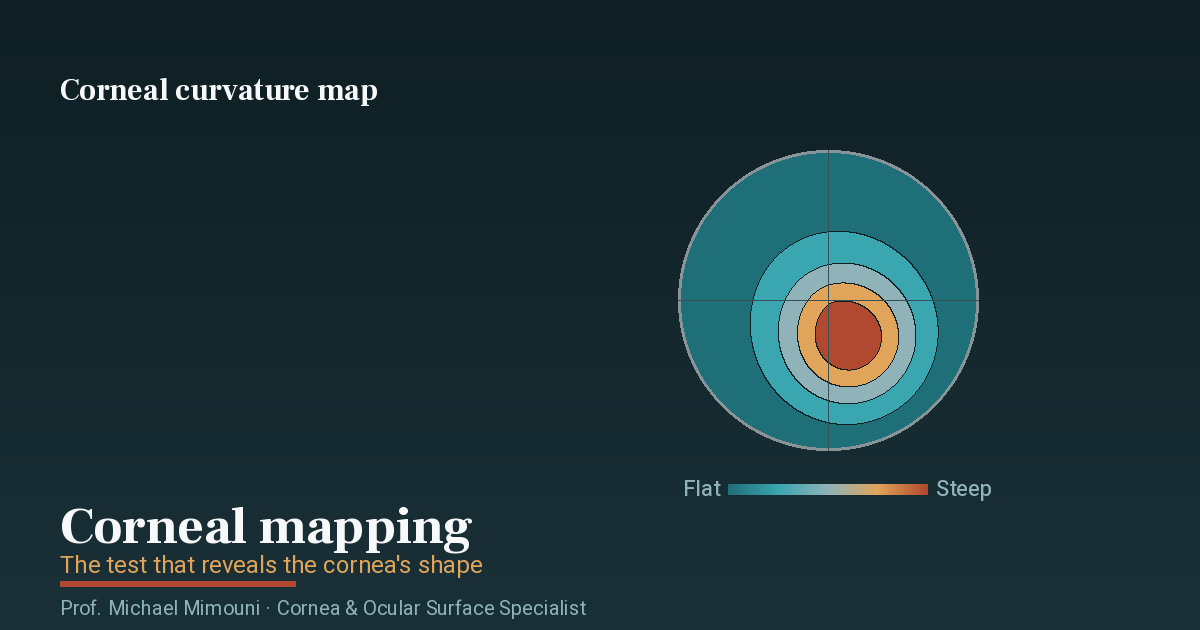
From this follows a practical conclusion easy to miss: because there is no chance to “correct” it afterwards with a rival opinion, preparation for the expert’s examination is almost the whole game. Orderly documentation of visual acuity over time, reliable visual field tests, and corneal mapping — all of these should be placed before the expert, not recounted to him.
When the accident is also a work accident: section 6b
A road accident on the way to work, or during work, is also a work accident — and then a mechanism enters that changes the whole order of operations. Under section 6b of the law, if a National Insurance medical committee has already set the disability rating, that determination binds the court in the road-accident claim. In such a case no further court expert is usually appointed — the percentage set at National Insurance is the percentage.
The court may permit a deviation only for special reasons that are recorded — a genuine legal defect in the determination process, or a material new change in the condition that was not previously known. This is not an open door; it is a narrow emergency exit.
Alongside it runs the deduction rule: the benefits already paid by National Insurance for the same injury are deducted from the road-accident compensation, so that no double recovery for the same damage results. This means that in such a file it is worth coordinating the two tracks in advance, rather than running each separately.
How the eye percentage turns into money
In the road-accident track, compensation is not a monthly pension but a sum awarded at once, made up of several heads of damage. The two central ones in an eye injury are:
Pain and suffering. Here, unlike in ordinary tort, there is no free estimate but a closed statutory formula: the compensation is derived from the percentage of permanent disability, the number of days of hospitalisation after the accident, and a reduction by the victim’s age. There is a ceiling — on the order of about 180,000 shekels for full disability, an amount updated from time to time. A severe eye injury, leaving a substantial permanent disability and attended by hospitalisation and surgery, moves closer to that ceiling.
Loss of earnings. Here the distinction between medical and functional disability enters: the same medical percentage affects a taxi driver, a surgeon and an office worker differently. The loss of one eye, for example, impairs stereoscopic vision and the peripheral field — which matters especially in occupations dependent on distance estimation. On the consequences of a one-eyed state, see one-eye blindness and disability.
Eye injuries typical in road accidents
The injuries I see in this context recur: blunt trauma from the steering wheel, the airbag or the windscreen; a penetrating injury from glass fragments; an orbital fracture. And after them, sometimes months later, the complications: traumatic cataract, traumatic glaucoma, retinal detachment, and optic nerve injury. Some of these complications develop late, which is a good reason not to close a medical file too early.
What should be documented before the expert’s examination:
- Immediate documentation from the emergency room and hospitalisation — it anchors the link between the injury and the accident, and the days of hospitalisation that enter the pain-and-suffering formula.
- Corrected visual acuity measured on more than one occasion, to show a stable state rather than a point in time.
- Visual field tests with printed reliability indices — especially in optic nerve or retinal injury.
- Corneal mapping and OCT imaging to document the structural damage.
- A follow-up sequence showing which complications developed and when — a cataract or glaucoma that appeared after the accident belongs to the file.
Bottom line
An eye injury in a road accident is measured medically by the same schedule as in any other track, but it proceeds entirely differently: absolute liability with no question of fault, a single court-appointed expert instead of private opinions, and compensation awarded at once by formula. And where the accident is also a work accident, the National Insurance determination binds and shortens the road. Whoever understands this structure knows where the outcome is decided — not in the courtroom, but in the documentation placed before the expert.
Frequently asked questions
Do I have to prove who was at fault to be compensated for an eye injury?
No. The Road Accident Victims Compensation Law is built on absolute liability: a bodily-injury victim is entitled to compensation without proving fault, and even if the accident was his own fault — subject to statutory exceptions such as driving without a licence or insurance, a stolen vehicle, or deliberate causation. The claim is brought against the compulsory insurer of the vehicle, and where there is no valid insurance or the driver fled the scene, the Karnit fund (the Fund for Compensation of Road Accident Victims) steps in.
Who determines the eye disability percentage after a road accident?
A single medical expert appointed by the court. This is the great difference from an ordinary tort claim: in a road-accident claim the parties do not submit their own private opinions — Regulation 9(b) of the Experts Regulations even bars the expert from receiving opinions from the litigants. The expert examines the eye, sets the medical disability percentage by the National Insurance schedule, and the court relies on that determination. This is why the quality of preparation for the expert's examination — the documentation placed before him — is critical.
The accident happened on the way to work. Does that change anything?
Considerably. A road accident that is also a work accident triggers section 6b of the law: if a National Insurance medical committee has already set the disability rating, that determination binds the court in the road-accident claim too, and usually no further court expert is appointed. Deviation is allowed only for special reasons that are recorded. In parallel, the benefits already paid by National Insurance are deducted from the road-accident compensation, to prevent double recovery.
How much compensation is there for pain and suffering?
Pain-and-suffering compensation in a road accident is not left to open discretion but to a closed statutory formula: it is derived from the percentage of permanent disability, the number of days of hospitalisation, and a reduction by age. There is a ceiling — on the order of about 180,000 shekels for full disability, an amount updated from time to time. This differs fundamentally from National Insurance, where the outcome is a grant or a monthly pension rather than a one-off sum by formula.