“How much does cross-linking cost?” is one of the first questions asked after a diagnosis of keratoconus — and in Israel the answer is a pleasant surprise. For the medical indication, the treatment is included in the national health basket, so the real question is not how much it costs but whether you meet the condition and what the route is. This page explains the coverage, the key requirement, and when a private cost may still arise.
The short answer: the treatment is covered
Cross-linking to treat advancing keratoconus or ectasia (a weakening of the cornea) after laser surgery is included in the national health basket. That means that on the public route there is no private cost for the treatment itself — all that is needed is a Form 17 from your health fund. This is an important distinction from elective procedures such as laser vision correction, which are not in the basket: cross-linking for the appropriate indication is a medically necessary treatment meant to halt deterioration and prevent irreversible damage.
What Form 17 is and how to get it
Form 17 is a health fund’s financial-commitment form to pay for treatment or surgery carried out in a hospital. The practical process is simple: the ophthalmologist documents the indication — that the keratoconus is advancing, or that it is post-laser ectasia — refers you for treatment, and the fund issues Form 17 accordingly. With the form, the treatment is carried out within the public system at no direct charge for it. Eligibility terms and the exact route can vary between funds and are updated from time to time, so it is worth confirming what is current with your fund.
The key requirement: documenting progression
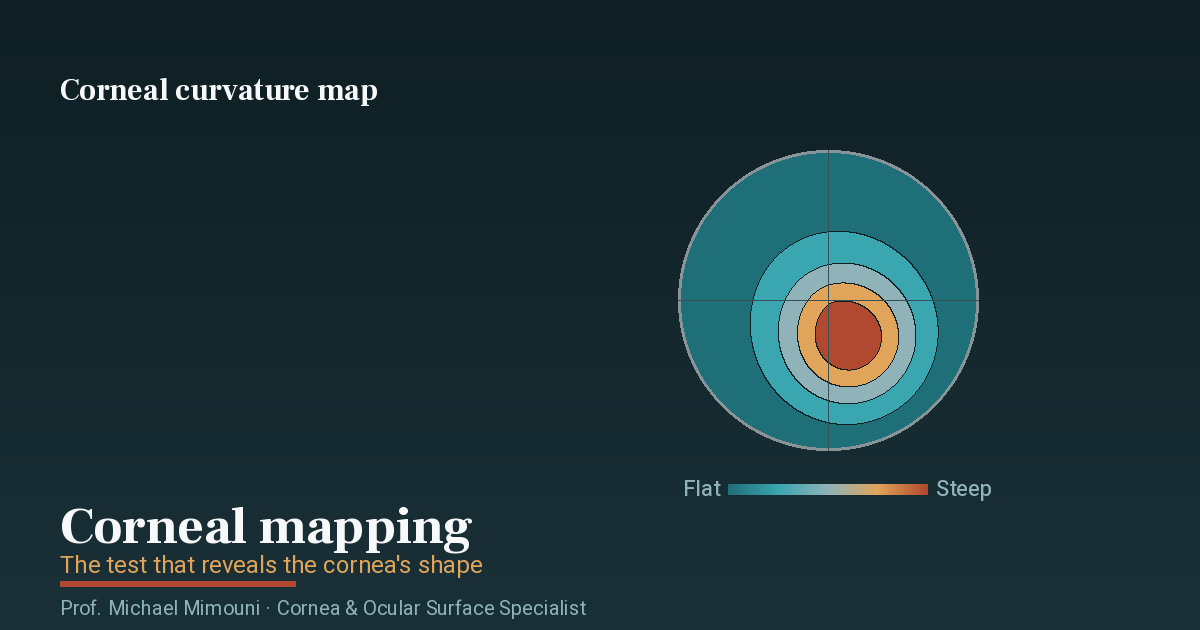
The point that decides coverage is that the condition is progressing. Cross-linking stabilizes a cornea that is weakening — it is not intended for a stable cornea, and it does not by itself improve visual acuity. So the indication, and the coverage, rest on documenting progression: usually through repeat corneal topography over time showing a change in the shape of the cornea. On the distinction between a stable and a progressing cornea, and exactly what the treatment does, see keratoconus and cross-linking. It also follows that there is no point in rushing to treat a stable cornea, and no need to pay for it — a stable condition is monitored, and treated only if progression appears.
When a cost may still arise
The public route with Form 17 covers the treatment, but some people choose, for various reasons, a private route — a particular surgeon, faster timing, or a private hospital — through complementary insurance or private insurance. In that case a cost arises, and it varies between providers and levels of cover. As with any treatment, it is worth clarifying in advance exactly what a quote includes, what the insurance covers, and what the co-payment is. Here, unlike laser vision correction, this is a matter of choosing a route — not of an absence of coverage.
Examination and consultation
The decisive step is not a price inquiry but an examination: to diagnose the keratoconus, determine whether it is progressing, and document it properly — because that is what both determines the treatment and opens the coverage. Prof. Michael Mimouni is a cornea specialist, and the examination assesses the state of the cornea, the trend of progression, and what suits your eye. Get in touch to arrange an examination.
The information on this page is general and not a substitute for a personal examination and medical advice, and is not insurance advice. Coverage terms are determined with your health fund and insurer.
Frequently asked questions
How much does cross-linking cost in Israel?
For the medical indication — advancing keratoconus or ectasia (corneal weakening) after laser surgery — the treatment is included in the national health basket, so on the public route there is no private cost for the treatment itself. What is needed is a Form 17 from your health fund. A private cost arises only if you choose a private route by preference.
What is Form 17?
Form 17 is a health fund's commitment form to pay for treatment or surgery in a hospital. Once the doctor documents the indication (progression of the keratoconus, or ectasia), you receive the form from the fund, and the treatment is carried out within the public system at no direct charge for it.
If my keratoconus is stable, is the treatment still covered?
Cross-linking is meant to stabilize an advancing cornea, not to treat a stable one. Coverage rests on documenting progression — usually through repeat corneal topography over time. If the condition is genuinely stable, treatment is usually not needed right now, only monitoring, so the question of coverage does not arise.
Is there a private route?
Yes. Some choose to have the treatment privately — with a particular surgeon, faster timing, or in a private hospital — through complementary or private insurance. In that case there is a cost, and it varies between providers. It is worth checking in advance what a quote includes and what the insurance covers.