Few injuries hurt as much as a scratch on the cornea. The cornea – the clear window at the front of the eye – is one of the most densely innervated tissues in the body, so even a tiny superficial injury can feel like a knife in the eye. The good news: most abrasions heal quickly and leave no trace. The less good news: a small proportion become complicated, and sometimes what looks like “just a scratch” is actually an embedded foreign body, an infection or a penetrating injury. This page explains what to do and what not to do, and when you must not wait.
How it happens
The usual causes are everyday ones: a baby’s fingernail, a branch in the garden, a sheet of paper, a mascara brush, a contact lens forced in or out, or sand and dust blown in by the wind. A foreign body – a metal fragment, sawdust, glass, a seed husk – usually gets into the eye while working with tools: grinding, welding, drilling, sawing and hammering metal on metal. In these situations the fragment can enter at high speed, so any injury from a work tool needs to be taken particularly seriously.
The signs
- Sharp pain and a feeling of “something in the eye” that gets worse when blinking.
- Watering, redness and sensitivity to light.
- Difficulty opening the eye.
- Blurred vision, especially when the abrasion is in the centre of the cornea.
The foreign body sensation can persist even after the foreign body itself has come out – the scratch it left behind feels exactly the same. And the reverse is also true: a foreign body stuck under the upper eyelid can scratch the cornea with every blink until it is removed.
What to do straight away – and what not to do
Do:
- Rinse the eye gently with clean water or saline – this washes out sand and dust that are not embedded.
- After contact with a chemical (cleaning products, lime, cement, acid): rinse immediately, generously and continuously for at least 15 minutes – and only then go to the emergency room. This is an emergency.
- Remove your contact lens, if you wear one.
- Blink a few times and gently pull the upper eyelid down over the lower one – this sometimes dislodges a small foreign body.
Don’t:
- Don’t rub the eye.
- Don’t try to remove a foreign body embedded in the cornea with tweezers, a needle, the corner of a towel or a cotton bud.
- Don’t put in drops you happen to have at home – especially not steroid drops.
- If you suspect something has penetrated into the eye, or an object is stuck in the eye – do not press on the eye, cover it with a cup or a rigid shield without applying pressure, and go to the emergency room immediately.
When to seek care immediately
- An injury from a high-speed work tool (grinding, drilling, hammering metal) – even if the pain is mild.
- A chemical injury, after rinsing.
- Reduced vision, severe pain that is not improving, or a pupil that does not look round.
- A foreign body that appears to be embedded in the cornea.
- Contact lens wearers with a red, painful eye – this is treated as an infection until proven otherwise (see contact lens keratitis).
- An injury from plant material (a branch, thorn or leaf) – because of the risk of fungal infection.
- Any abrasion that is not clearly improving within a day or two.
What happens at the examination
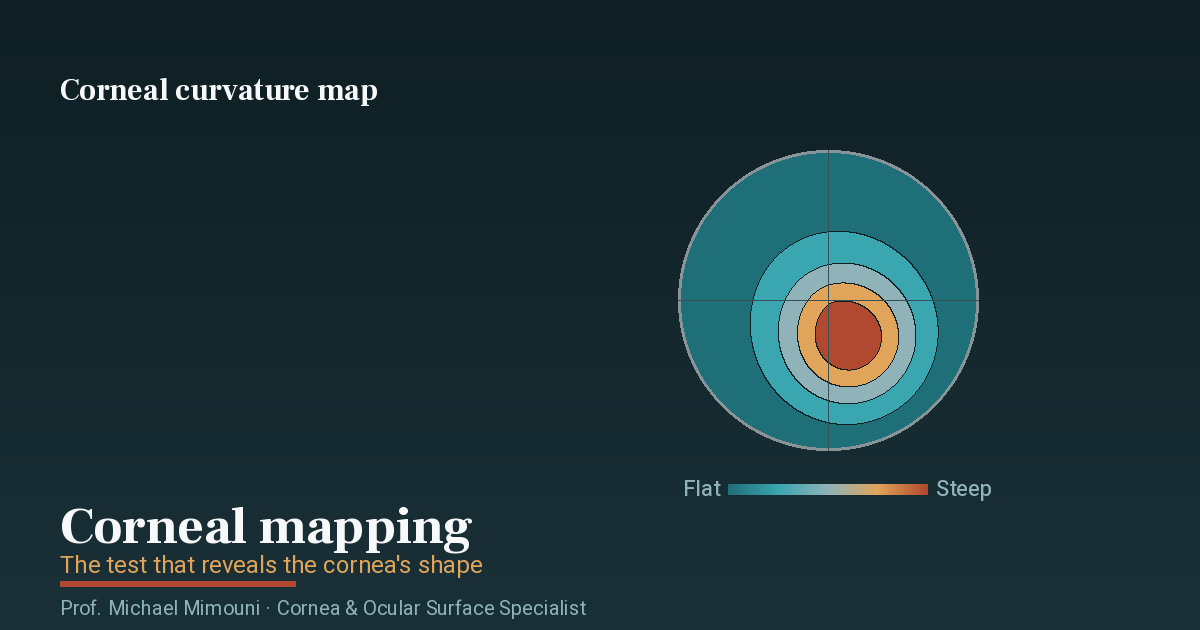
The ophthalmologist numbs the surface of the eye with a drop so that it can be opened and examined comfortably, and examines it with a slit lamp using fluorescein dye, which makes the abrasion light up green. The doctor turns the upper eyelid over to look for a hidden foreign body, checks that there is no penetrating wound, and makes sure that vision and eye pressure are normal. When a fragment is suspected to have entered the eye – particularly after working with metal – imaging (CT) is needed to rule out a foreign body inside the eye.
Removing a foreign body is done at the slit lamp, under numbing drops, with a fine instrument. An iron fragment that stays in the cornea for even a few hours sometimes leaves a “rust ring” – a brown mark that the doctor also removes, sometimes with a tiny ophthalmic burr. It is not painful and usually takes minutes.
Treatment
- Antibiotic ointment or drops to prevent infection until the cornea has closed. For contact lens wearers, an antibiotic is chosen that also covers the bacteria typically associated with lenses.
- Pain relief: ordinary painkillers by mouth, and sometimes drops that dilate the pupil and relax the painful spasm in the eye.
- No patching in most cases – a pressure patch does not speed up healing and may increase the risk of infection. For a large abrasion, the doctor may decide on a therapeutic contact lens.
- Numbing drops are not given to take home: repeated use harms corneal healing.
- No contact lenses until the doctor gives the go-ahead, usually a few days after complete healing.
Most superficial abrasions close within one to three days. For large injuries, after removal of a foreign body or after contact with plant material, a follow-up visit is arranged within a day or two. For how to use the drops correctly, see antibiotic eye drops.
Complications worth knowing about
Infection (keratitis). An abrasion is an entry point for bacteria and fungi. Pain that is getting worse instead of better, discharge, or a white spot on the cornea – all require an immediate re-examination.
Recurrent erosion. Sometimes the regrown epithelium does not attach properly to the tissue underneath, and weeks or months later sharp pains appear, typically on opening the eyes in the morning. This is recurrent corneal erosion – a common condition after an abrasion, and a treatable one. A lubricating ointment at bedtime in the weeks after the abrasion helps prevent it.
Scarring. A deep abrasion or an infection in the centre of the cornea may leave a scar that affects vision. Most superficial abrasions leave no scar at all.
Prevention
Wear safety glasses for any work with power tools, grinding, welding, pruning and chemicals – even for a “one-minute” job. Keep your nails short when caring for babies, and follow proper contact lens hygiene. If the eye injury happened at work, it also has a National Insurance (Bituach Leumi) aspect – see eye injury at work.
When to have your eye examined
Any abrasion or foreign body that has not clearly improved within a day or two, an injury from a work tool, or recurring morning pain after an old abrasion – these are all reasons to see an ophthalmologist. Prof. Michael Mimouni is a cornea specialist; at the examination we will assess the state of the cornea, make sure no foreign body or vision-affecting scar remains, and treat any complications. Contact us to book an examination. For other eye conditions, see eye diseases.
The information on this page is general and is not a substitute for a personal examination and medical advice. Diagnosis and treatment decisions are made only after a full eye examination. In the case of a chemical injury, a suspected penetrating injury or reduced vision, go to the emergency room immediately.
Frequently asked questions
How long does a corneal abrasion take to heal?
A small, superficial scratch usually heals within one to three days, because the surface layer of the cornea (the epithelium) regenerates very quickly. A large, deep or contaminated abrasion can take longer, so it is important for an ophthalmologist to examine the eye and decide on treatment and when to follow up.
Should the eye be patched?
Usually not. Studies have shown that a pressure patch does not speed up healing or reduce pain, and may even increase the risk of infection – especially in contact lens wearers. The decision to patch the eye or to use a therapeutic contact lens is for the ophthalmologist to make.
Can I rinse my eye with water?
Yes. Gently rinsing with clean water or saline is the right first step when sand, dust or a chemical gets into the eye. With a chemical, rinse immediately and generously for at least 15 minutes, then go to the emergency room. Do not rub the eye, and do not try to remove an embedded foreign body with tweezers or a stick.
Why won't the doctor give me numbing drops to take home?
Numbing (anaesthetic) drops make the pain disappear for a short time, but repeated use slows the healing of the cornea and can cause serious damage. That is why they are used mainly during the examination itself. For pain at home, ordinary painkillers are used, and sometimes drops that dilate the pupil.