Seeing double is confusing and frightening. The good news: there is a simple test you can do at home that immediately points in the right direction – cover one eye. The answer divides double vision into two completely different types, with different causes and different levels of urgency. This page explains both, and when you need to seek care right away.
The first test: cover one eye
When you see double, cover one eye and check: does the doubling disappear or remain? Then do the same with the other eye.
- The doubling disappears when one eye is covered – this is double vision of both eyes (binocular). Each eye on its own sees a single image, but the two eyes are not aimed at exactly the same point, so the brain receives two different images.
- The doubling remains even when looking with one eye only – this is double vision of one eye (monocular). The problem is inside the eye itself: light does not focus to a single point.
Double vision in one eye: usually the cornea, tears or lens
Double vision in one eye usually looks like a “shadow” or a double outline beside letters and lights, rather than two completely separate images. The common causes:
- Uncorrected astigmatism – an outdated glasses prescription, or astigmatism that was never corrected.
- Dry eye and an unstable tear film – the doubling changes during the day and improves after blinking or using lubricating drops.
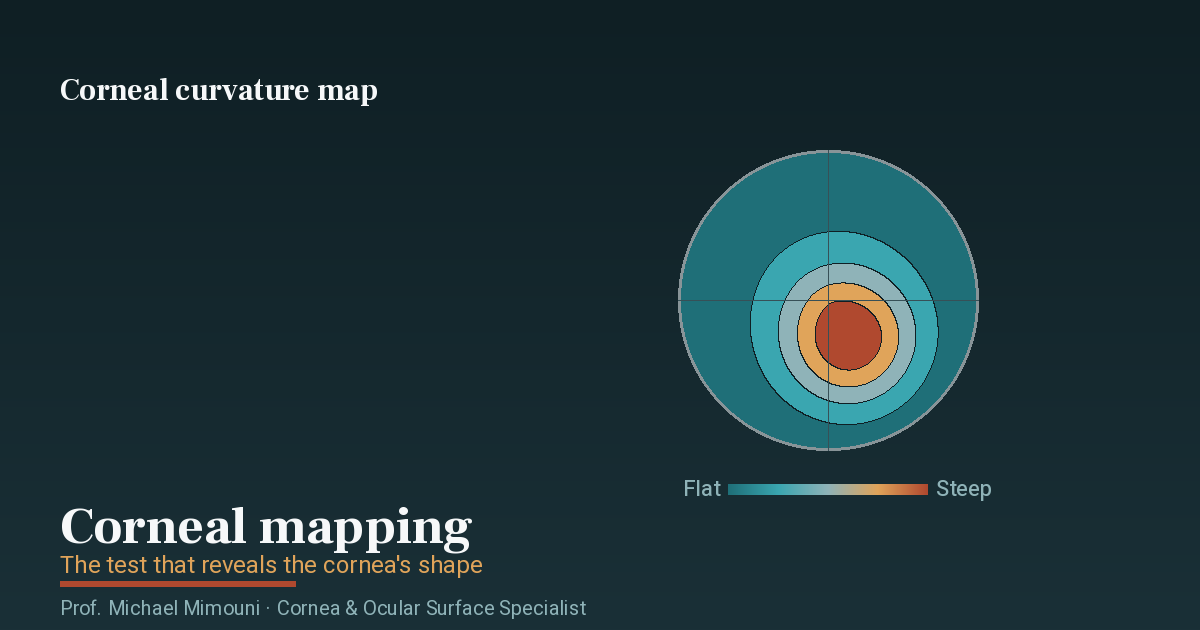
- Corneal irregularity – keratoconus, a scar after an infection or injury, or irregularity after surgery. Corneal topography identifies most of these conditions.
- Cataract – clouding of the lens that scatters light, especially in the early stages.
Double vision in one eye is not an emergency in most cases, but it does warrant an examination by an ophthalmologist. In most cases the cause is treated – suitable glasses or contact lenses, treatment of dry eye, corneal treatment or cataract surgery – and the doubling goes away or lessens.
Double vision with both eyes: an alignment problem
Here the eyes themselves are healthy, but they do not move together. The main causes:
- A squint (strabismus) that has been present since a young age and has started to cause doubling, for example when tired.
- Palsy of a nerve that moves the eye – this can occur in people with diabetes or high blood pressure, but it can also result from conditions that require urgent investigation of the brain and blood vessels.
- Thyroid eye disease – the muscles that move the eyes thicken and restrict movement. Read more in Thyroid eye disease.
- Diseases of the nerves and muscles, such as myasthenia gravis, in which the doubling and eyelid drooping get worse toward the end of the day.
- Injury to the head or eye socket.
When to go to the emergency room right away
Double vision of both eyes that comes on suddenly is a reason to go to the emergency room the same day, rather than waiting for an appointment. This is especially true if it comes with:
- a severe headache or pain around the eye;
- a drooping eyelid or a pupil larger than usual on one side;
- weakness in an arm or leg, facial drooping, or difficulty speaking or swallowing – in this case call 101, the emergency medical service;
- a head injury;
- over age 50: a new headache in the temples or jaw pain when chewing.
For the difference between conditions that need the emergency room, a same-day examination or a regular appointment, see Urgent eye problems.
What happens during the examination
The examination starts with the question you checked at home: does the doubling disappear when one eye is covered? For double vision of one eye, the ophthalmologist checks your prescription, tear film, cornea and lens, and sometimes performs corneal topography. For double vision of both eyes, the eye movements are checked in all directions of gaze, along with the eyelids and pupils, and the deviation is measured. Depending on the findings, you may be referred, when needed, to an ophthalmologist who specializes in strabismus or neuro-ophthalmology, and sometimes for an imaging test.
Examination with Prof. Michael Mimouni
Prof. Michael Mimouni, Director of the Cornea Unit at Rambam, sees patients with problems of the cornea and ocular surface at his clinics in Herzliya Pituach and Haifa – including double vision in one eye caused by astigmatism, dry eye, keratoconus or a corneal scar. For double vision of both eyes, the examination clarifies the next step and where to go from there. If double vision comes on suddenly, go directly to the emergency room. Contact us to schedule an examination. For assessment of double vision for disability purposes, see Double vision – disability rating.
The information on this page is general and is not a substitute for an examination and personal medical advice. Diagnosis and treatment decisions are made only after a full eye examination. If double vision comes on suddenly, go to the emergency room right away.
Frequently asked questions
How do I know whether my double vision is in one eye or both?
Cover one eye, then the other. If the doubling disappears when either eye is covered, it is double vision of both eyes, caused by the eyes not pointing together. If the doubling remains when you look with only one eye, it is double vision of one eye, usually caused by a problem in the cornea, the tear film or the lens of that eye.
When is double vision an emergency?
Double vision of both eyes that comes on suddenly is a reason to go to the emergency room right away – especially if there is also a severe headache, a drooping eyelid, a pupil larger than usual, weakness, facial drooping or difficulty speaking. If you have signs like these, call 101, the emergency medical service.
Can dry eye cause double vision?
Yes. An unstable tear film can cause a shadow or mild doubling in one eye that changes during the day and improves after blinking or using lubricating drops. If the doubling does not improve with blinking, or if it is constant, another cause should be looked for.
What should I do about double vision in one eye?
Book an appointment with an ophthalmologist. The common causes are uncorrected astigmatism, dry eye, keratoconus or another corneal irregularity, and cataract. In most cases the treatment targets the cause – suitable glasses or contact lenses, treatment of dry eye, or surgery when needed – and the doubling goes away or lessens.